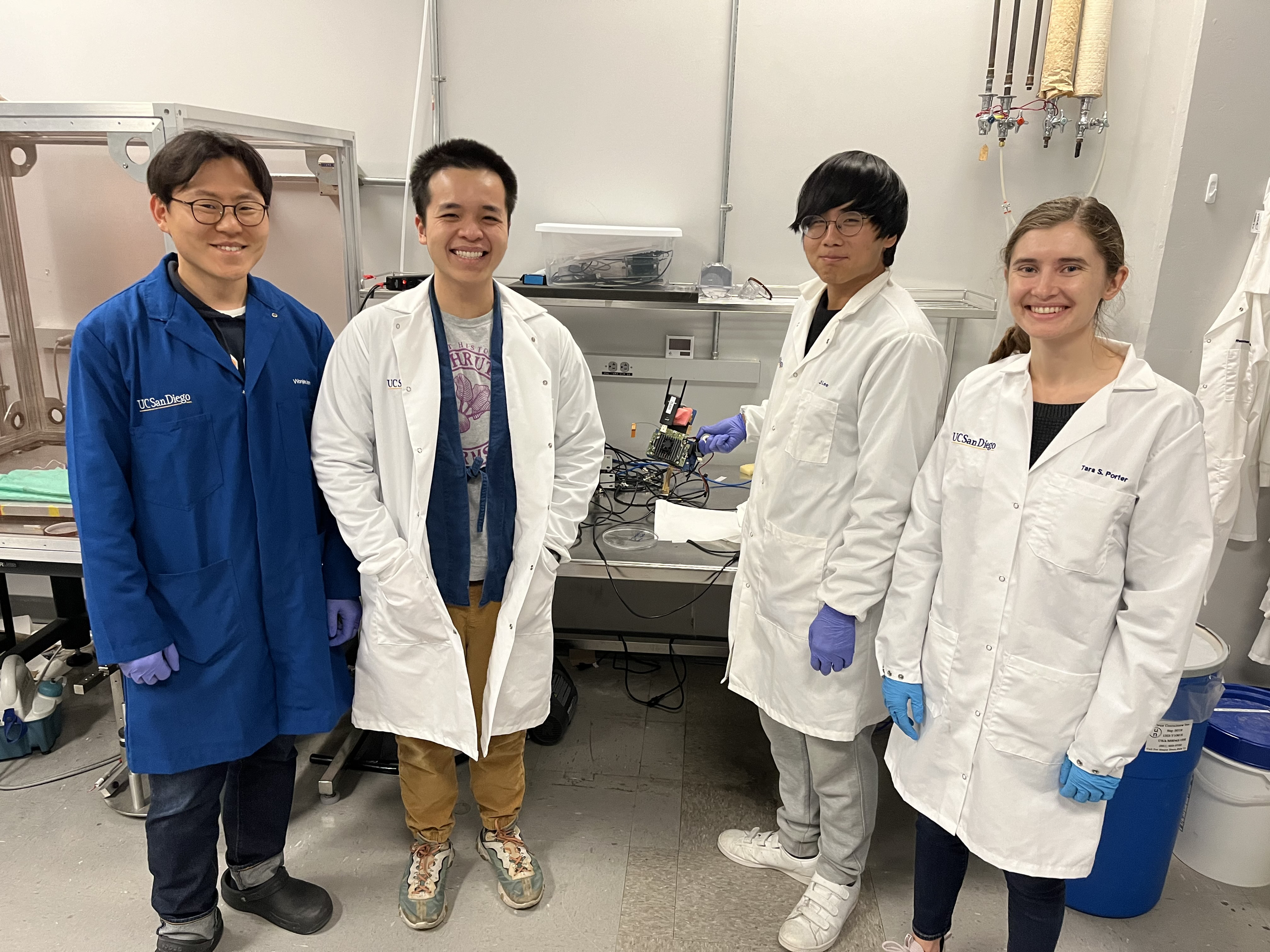
As an MS student and hardware & firmware engineer at Prof. Shadi Dayeh's Integrated Electronics and Biointerfaces Laboratory (IEBL) at UC San Diego, I contributed to an NIH BRAIN Initiative–funded project to build a portable, wireless neural data acquisition system for patients with drug-resistant epilepsy.
Approximately a third of people with epilepsy cannot control their seizures with medication alone - resection or neuromodulation surgery is often required. Intracranial monitoring with high-resolution electrodes gives clinicians a far more precise picture of the epileptic network before operating. The goal of this system is to let patients wear that monitoring hardware at home and live normally, rather than being tethered to a hospital bed.
IEBL's ultra-high-density thin-film electrodes - featuring a patented platinum nanorod interface for low impedance - provide the neural interface. The system supports one surface grid (4,096 recording, 256 stimulation channels) and up to eight depth probes (128 recording, 16 stimulation each), totalling 6,144 channels at 16-bit depth and 2,500 samples per second.
System Architecture
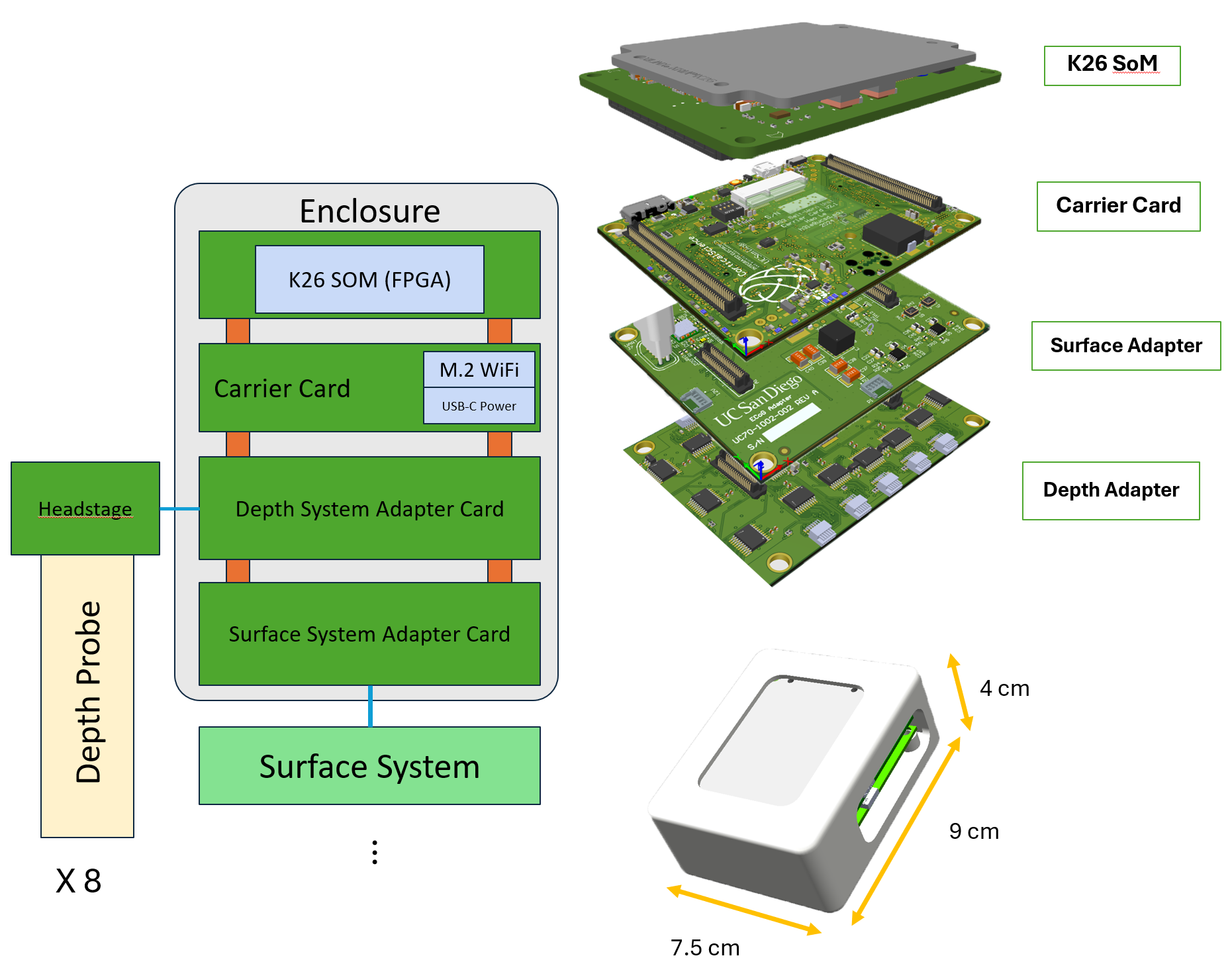
The system is built around a Xilinx K26 System-on-Module, combining an FPGA programmable logic domain with a full Linux processing system. The FPGA handles deterministic low-level I/O - clocking recording chips, managing data streams, and driving stimulation - while the ARM processors run PetaLinux, serving an HTTP API that a Windows client uses to send commands and receive neural data into OpenEphys for real-time visualization and storage.
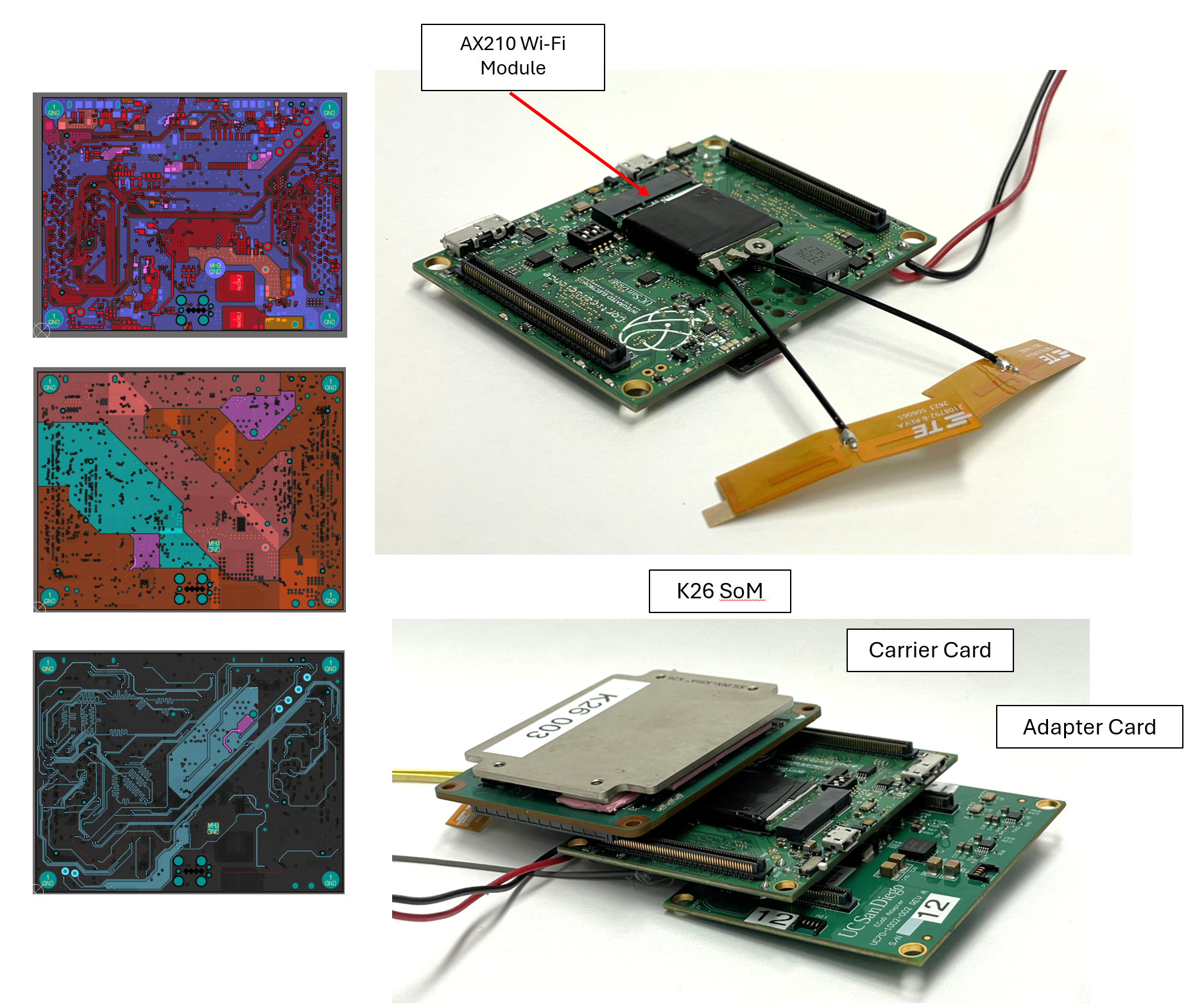
The on-person hardware stack consists of a Carrier Card, surface and depth Adapter Cards, and headstages that plug directly into the recording and stimulation chips. Wi-Fi 6E provides the wireless uplink to the off-person workstation. A 20,000 mAh battery sustains eight hours of continuous acquisition.
Carrier Card Design
I designed the Carrier Card - an 8-layer, controlled-impedance PCB that serves as the backbone of the on-person unit. It interfaces with the K26 SoM's high-density connectors and provides power regulation and sequencing, USB-C Power Delivery 2.0 negotiation for beyond 15 W, USB 3.0, Wi-Fi 6E via an M.2 slot (Intel AX210), SD card storage, EEPROM, and auxiliary peripherals including UART, JTAG, current monitoring, and an accelerometer. FPGA I/O is routed down to the adapter cards over board-to-board connectors, allowing surface and depth signals to coexist.
SerDes Link Design
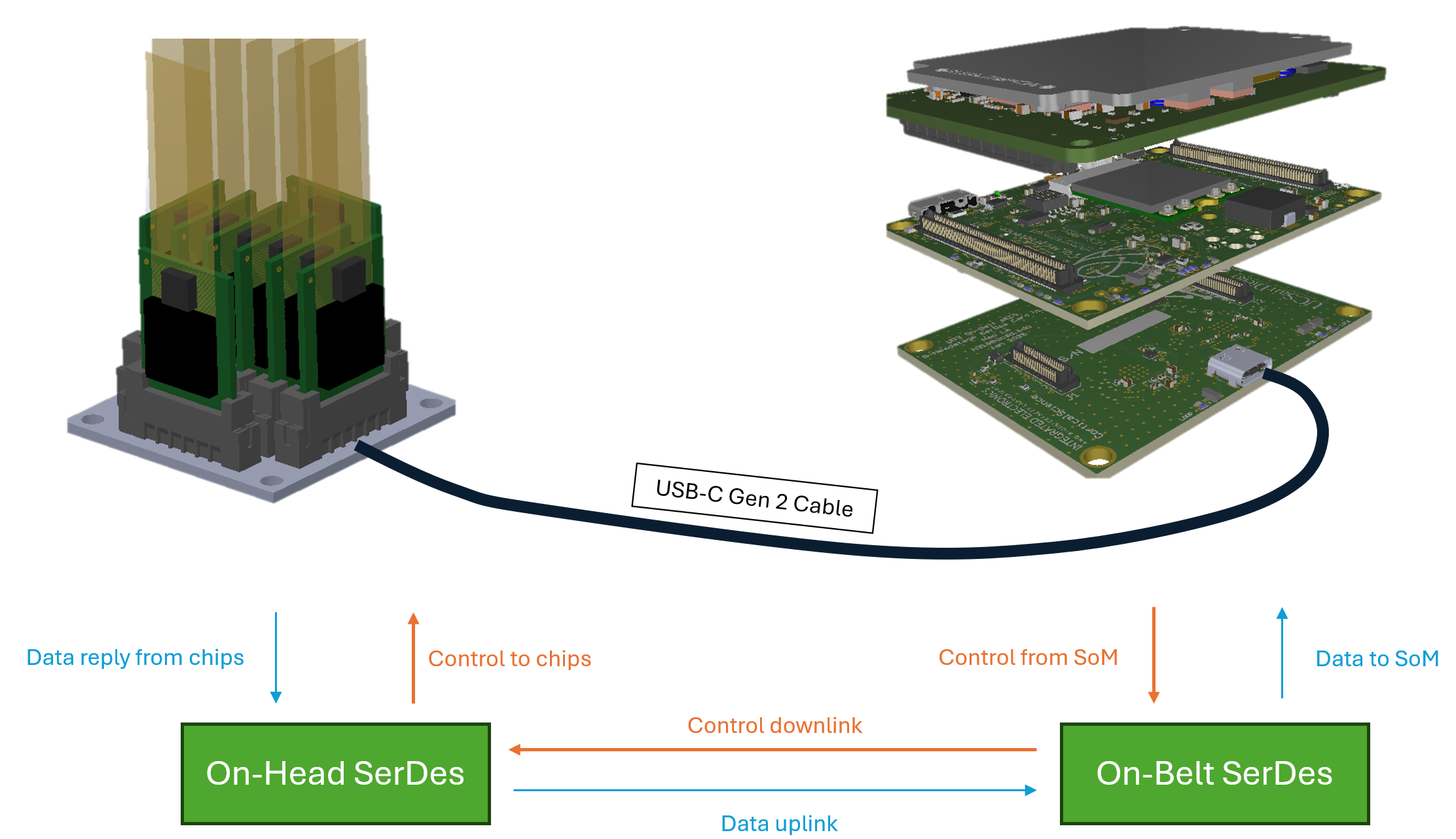
Connecting eight depth-probe headstages to the on-belt processing unit required a high-speed serial link. I designed the SerDes system using Texas Instruments chip pairs running at a 75 MHz I/O clock and 2.1 Gbps link rate - sufficient to carry all headstages at 2,500 samples per second with margin. USB-C connectors were chosen over edge connectors for their smaller form factor, durability over many mate cycles, and easy replaceability. A single USB-C Gen 2 cable (5 Gbps, four standard twisted pairs) carries both the high-speed data and power to each headstage.
Surface System
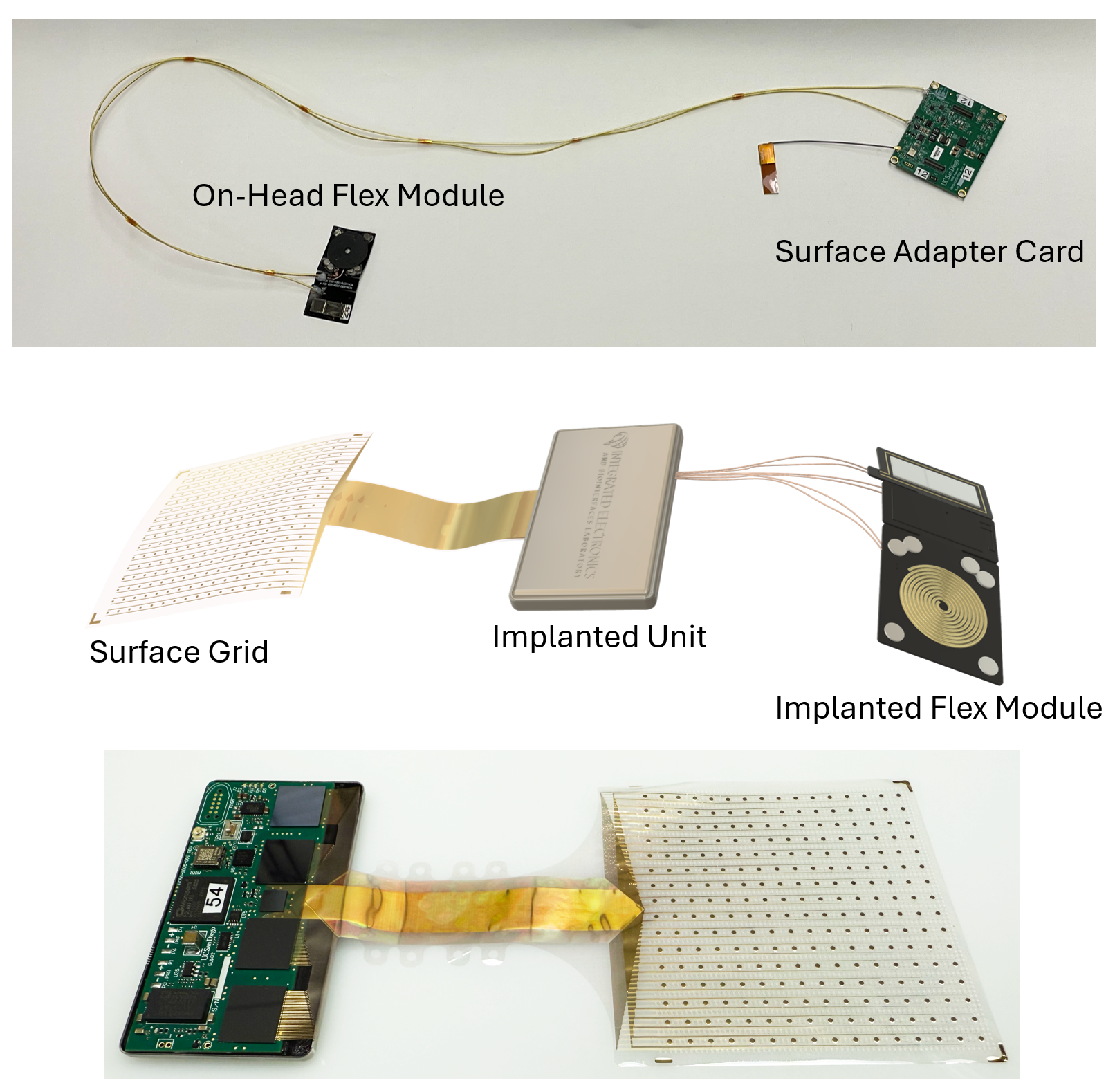
The surface grid path is more complex: data must cross the skull wirelessly because the acquisition ASIC is subcutaneously implanted. I collaborated with the surface system engineers on the adapter card, which contains an LC tank circuit for inductive transcutaneous power delivery, a Bluetooth Low Energy module for low-speed control, and a twin-axial link to an on-head flex module that routes data to and from the implanted PolarFire FPGA unit. The SoM's gigabit transceiver decodes the uplinked surface data alongside the wired depth streams.
Outcomes
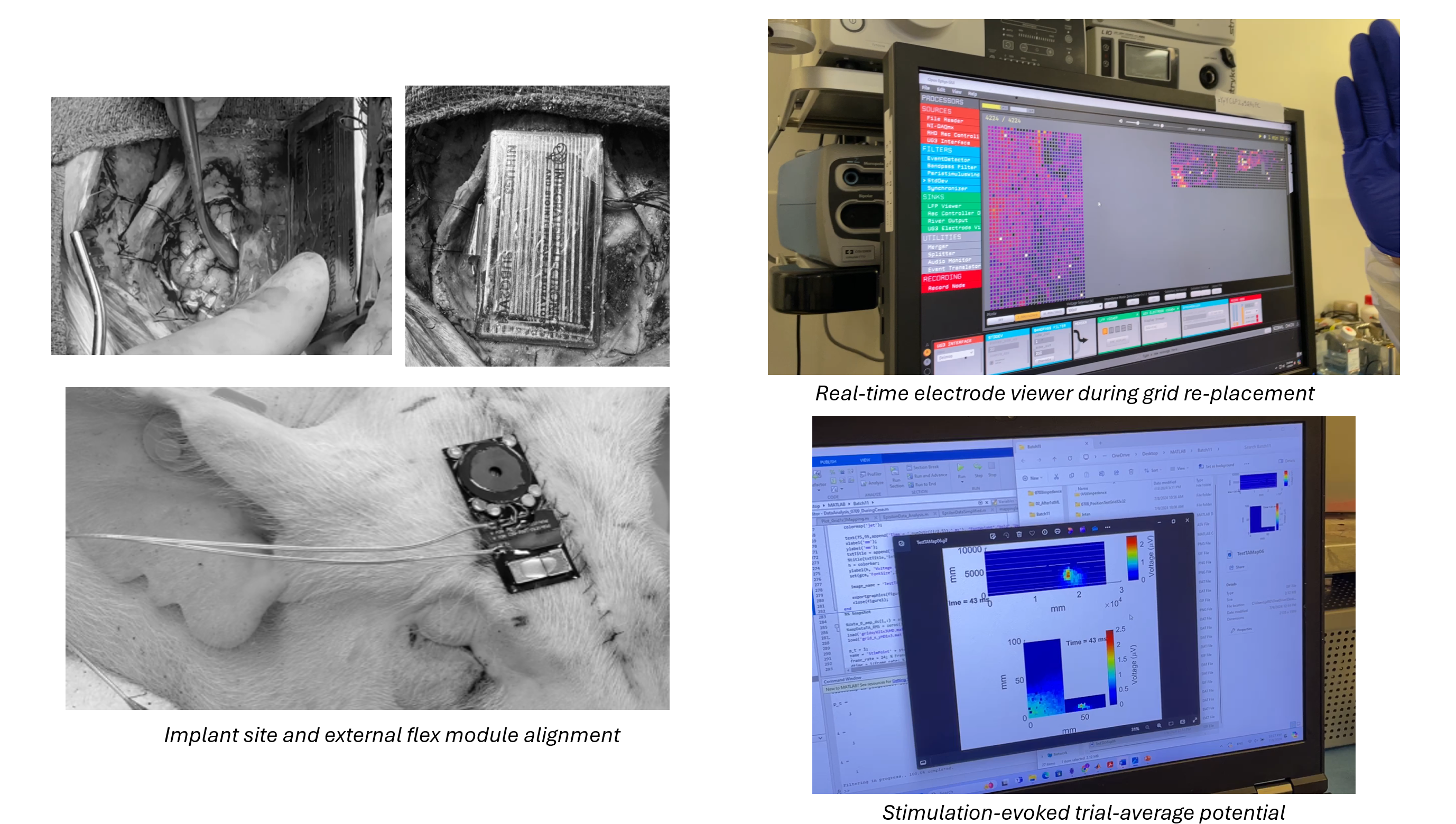
The system was validated in multiple benchtop and animal trials, demonstrating real-time recording and stimulation at full channel count over Wi-Fi. The first implantation of the full recording and stimulation system in a large animal survival model was demonstrated with six depth probes (864 total contacts) in a pig over 27 days of wireless ambulatory recording. Postmortem analysis showed no gross injury and minimal reactive gliosis.
IEBL is one of only two teams in the world - alongside Neuralink - to receive FDA approval for multi-thousand-channel brain interfaces. Human trials are targeted for Fall 2026.